


80th Anniversary of victory over japan

Chard Museum has access to the original diary and technical books of William Evans. William served on HMS Lothian. In his diary he tells the story of a mutiny by the ships crew.
Chard Museum in partnership with Chard Town Council and other community organisations including the Royal British Legion, the Inner Wheel, Chard Community Hub, the Culturally Chard Networking Group and the Carnival Committee are bringing Chard a celebratory and memory event on 16th August 2025, the venue is the Museum from 14:00 – 17:00. All are welcome. There will be no charge for entry.
Full details of the days programme will be available very shortly.
Victory over Japan Day VJ Day celebrates the day when Japan officially surrendered. This marked the official end of World War Two.
Here is William’s story …and remember the original diary will be available for people to read review and take away copies of some of his stories on August 16th.
Karen Evans has been a Chard resident for over 35 years. Shirley, William's daughter still lives in Castle Cary and has her own memories of William. In his diary William charts his journey from Greenock to the Dutch New Guinea, via New York, and the Panama Canal. He shares his daily routine of drills, painting, doing repairs and sentry duties, interspersed with some shore leave that was reflected by many servicemen’s experiences that “War is long periods of boredom punctuated by moments of sheer terror.”
For William some terror arrived in the unusual form of his own shipmates.

HMS Lothian was a cargo ship launched in 1938 under the name City of Edinburgh. She was requisitioned as a troop transport in 1939. In 1943 the ship was passed to the Admiralty. She was converted by the Royal Navy into a Landing Ship HQ for use in the Pacific operations. She was totally unsuited for this role.
In July 1944 she was recommissioned as HMS Lothian and was sent to be part of the US 7th Fleet as part of Force X. She left the Clyde on 3rd August 1944 and sailed first to New York. William mentions in his diary visits to Ellis Island, Long Island, Coney Island and the Statue of Liberty on the 14th August.

Between the 15th and 17th William and his friend Bill Ross spent the days and nights seeing the sights, such as Broadway and the Empire State Building, and getting free food, cigarettes and soft drinks, wherever they went and free tickets for a show. He mentions visiting Jack Dempsey’s Restaurant (World Heavyweight Boxing Champion in the 1920s) and buying candy, a powder compact and watch for Shirley, back home.
HMS Lothian left New York on 18th August 1944 and sailed down to the Panama Canal, under the command of Rear Admiral Arthur George Talbot. The ship’s complement had swelled to 750, instead of the normal 450. Conditions aboard were extremely poor as the ship, not having been built for tropical conditions, had poor ventilation and air conditioning and a lack of water.
On the journey William comments on how the sea is a beautiful blue under a new moon. “Only wish Shirley could see the flying fish”
He adds that they were very short of water, “a little each day for washing, no hot water.” As the ship is so crowded he chooses to sleep on deck. On reaching Panama the crew is given “a stern lecture” before going ashore. Despite this William and Sgt. Wall were taken, by a local taxi driver, to a road house,“where you have a drink and dance, then pick the girl you fancy, pay six dollars and she takes you upstairs. We did not like it, so we poked our heads in the door and almost ran out which amused the Military Policeman outside.”
After reaching Balboa, Panama on 1st September 1944, an armed mutiny (the first in the Royal Navy since the 19th century) occurred on board due to the atrocious conditions. A Royal Marine detachment was sent on board to quell the mutiny. William describes his role in dealing with the mutiny alongside the Marines. After the mutiny was dealt with he has additional duties to guard the mutineers and says “The ship is full of trouble.” A Court of Enquiry started on 3rd August, when William escorts the prisoners and also has to give a witness statement to the Enquiry. On the 29th September William wrote that he escorted the prisoners to their Court Martial.
17 senior men were court-martialled and reduced in rank, whilst other mutineers were given 6 months extra duties and punishment drill. However, the mutineers could not be removed from the ship in Balboa because there were no other ships or jails available. The sentences were therefore suspended. It must have been a very uncomfortable situation for all those onboard on their journey to the Pacific. Because of the seriousness of this incident, it was surrounded in secrecy and was not in the public domain until the 1980s.
On 29th September the Lothian joined the US 7th Fleet at New Guinea. William reports that there is very little water and what there is has diesel oil in it and food is short too. “The Lothian is in a bad state. There were thousands of ships in the bay.” The Lothian went unused by the Americans and eventually sailed to Sydney, after seeing no combat.
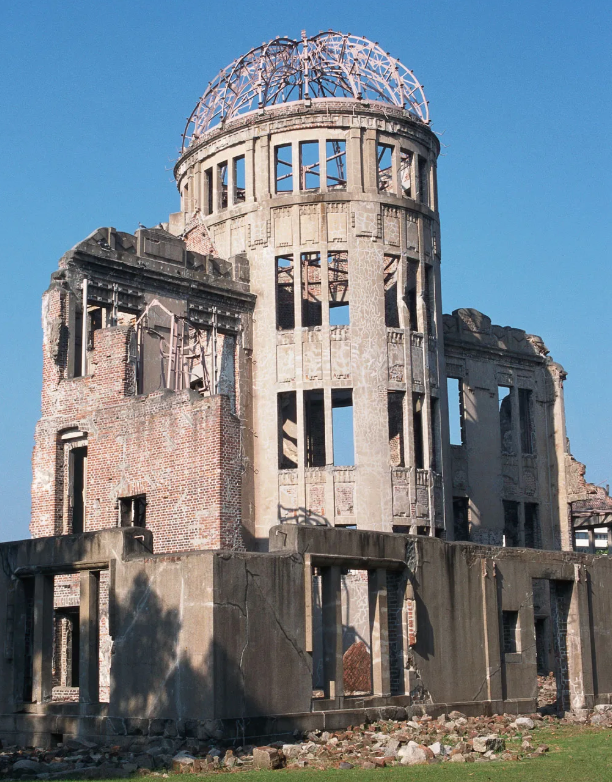
One story that Shirley has shared with us os of William telling her about sitting 90 miles off the Japanese cost waiting for the bombs to be dropped on Hiroshima. Then they Allied troops were allowed to enter Japan. It's a story we are still trying to confirm.
The Museums Archivists are still reading and digesting William’s diary. Do visit us on August 16th and view the dairy written 80 years ago and telling of one man’s true experiences of the end of World War 11.
Many thanks to Sue Heward for reading and sharing these memories and stories from William's Diaries.


Comments